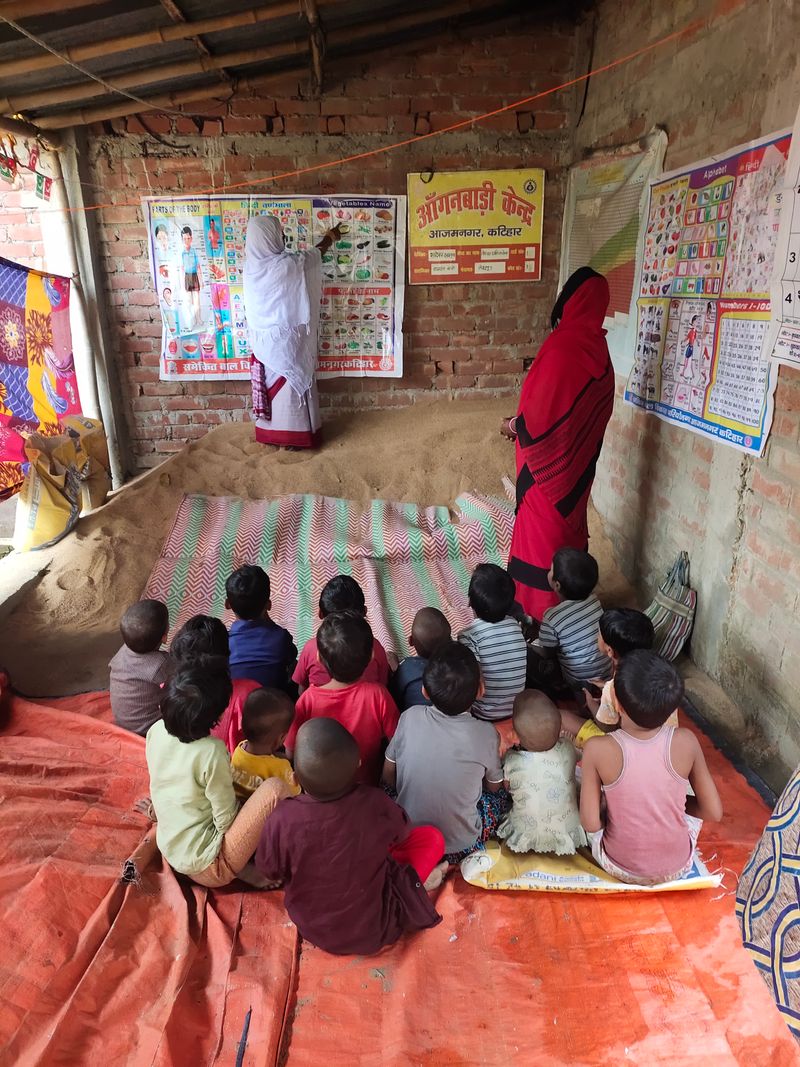
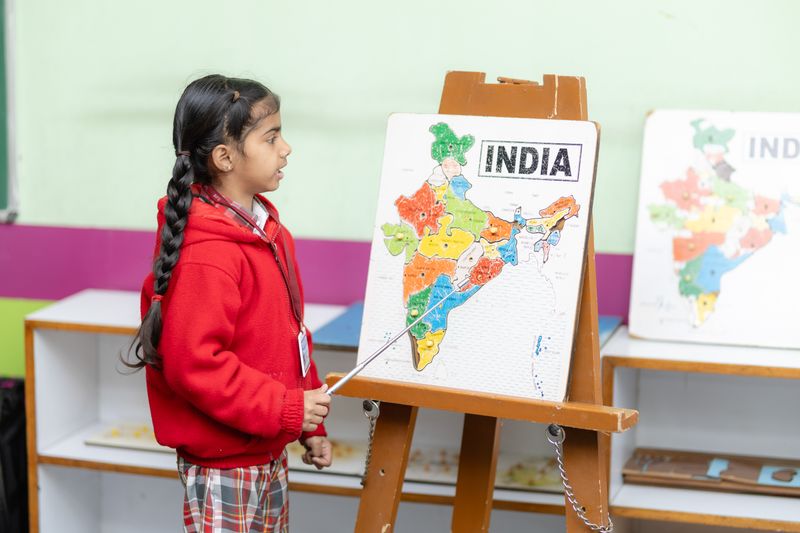
A young student reading a book in a library in Delhi

04 — Flagship project

LiCE — Linguistic Competency for Empowerment

Students study several languages for twelve years and still struggle to read fluently, write effectively or translate accurately. The problem is not effort. It is that language is taught as rules to memorise rather than as a system to understand.

Stage
Research
Geography
Geography to be confirmed
Partners
No partner announced
Domains

Lifecycle position

  1. 01

    Idea

  2. 02

    Research

  3. 03

    Pilot

  4. 04

    Implementation

  5. 05

    Measurement

  6. 06

    Knowledge Capture

  7. 07

    Publication

  8. 08

    Scaling

01 — Problem statement

What this project exists to address.

Many students study multiple languages throughout school yet continue to face difficulty reading fluently, understanding grammar, writing effectively, expanding vocabulary, speaking confidently, translating accurately and comprehending complex texts.

Language instruction often emphasises memorisation of rules rather than understanding how language functions. Learners invest considerable effort without developing strong transferable competencies.

Teaching the underlying principles of language reduces duplication across language subjects, because those principles transfer between languages.
Guiding principle

Language shapes thought. Thought shapes action. Action shapes society.

02 — Objectives

What the project sets out to achieve.

  • 01Redesign school language education by integrating modern linguistics, cognitive science, literacy research, educational psychology and communication studies
  • 02Strengthen reading, writing, listening, speaking, translation and multilingual learning through a progressive curriculum
  • 03Reduce duplication across language subjects by teaching principles that transfer between languages
  • 04Develop the reading comprehension, precise writing and critical questioning that effective interaction with AI systems requires

Conceptualised by

Deepak Dwivedi
A girl in school uniform standing with her classmates in a classroom in Alibag, Maharashtra

Alibag, Maharashtra · Unsplash

Target beneficiaries

  • School students, Classes 1 to 12
  • Language teachers
  • Schools and school systems
  • Teacher education institutions

03 — Programme structure

What the project is composed of.

  • 01

    Phonetics and Phonology

    Speech sounds and sound systems across languages.

  • 02

    Morphology

    Roots, prefixes, suffixes, word formation and systematic vocabulary expansion.

  • 03

    Semantics

    Meaning, context and the relationships among words.

  • 04

    Syntax

    Sentence structure, diagramming and the logical construction of ideas.

  • 05

    Pragmatics

    Communication in context.

  • 06

    Discourse Analysis

    Understanding longer texts and conversations.

  • 07

    Translation Studies

    Developing genuine multilingual competence.

04 — Activities

What is actually done.

  • Classes 1–5: phonics, phonetics, listening, pronunciation, reading fluency, storytelling, vocabulary through roots, oral communication
  • Classes 6–8: morphology, semantics, syntax, sentence diagramming, reading comprehension, writing, translation, public speaking
  • Classes 9–10: advanced grammar, comparative linguistics, vocabulary development, etymology, translation, precis writing, academic writing, critical reading
  • Classes 11–12: essay and research writing, technical and professional communication, media literacy, AI prompt writing, cross-cultural communication, linguistic analysis

05 — Roadmap

The long-term programme.

  1. Class 1–12 Curriculum

  2. Teacher Development Programme

  3. Digital Learning Platform

  4. Reading Laboratories

  5. Translation Laboratories

  6. AI Communication Labs

  7. National Reading Mission

  8. Multilingual Resource Library

  9. Teacher Certification

  10. International Research Collaboration

06 — Measurement

How progress on this project will be judged.

These measures are defined before implementation, so that the project can be evaluated on its results rather than its activity.
  • Curriculum stages published
  • Teachers trained
  • Schools adopting the pathway
  • Reading laboratories established
  • Languages supported

Awaiting publication

Impact data will be published as implementation progresses

The Council does not attribute outcomes to a project until they have been measured against a defined baseline. When results exist for this project, they will appear here and on the Impact page — including any that fall short of what was hoped for.

07 — Resources

Publications and downloads from this project.

The Knowledge Hub
  • LiCE Curriculum FrameworkIn preparation
  • Learning Progression MapIn preparation
  • Teacher Development HandbookIn preparation
  • Reading Excellence GuideIn preparation

Photographs and video

Awaiting publication

Programme photography

Documentation photography from this project will be published here, with the consent of participating institutions and in accordance with the Council’s Child Safeguarding Policy.

Awaiting publication

Recordings

Session recordings and explainers will be published in the media library as they become available.

Collaborate

Work with IPEC on LiCE.

Institutions, government departments, CSR partners, researchers and volunteers all have a route into this work.

Partner with IPECContribute