
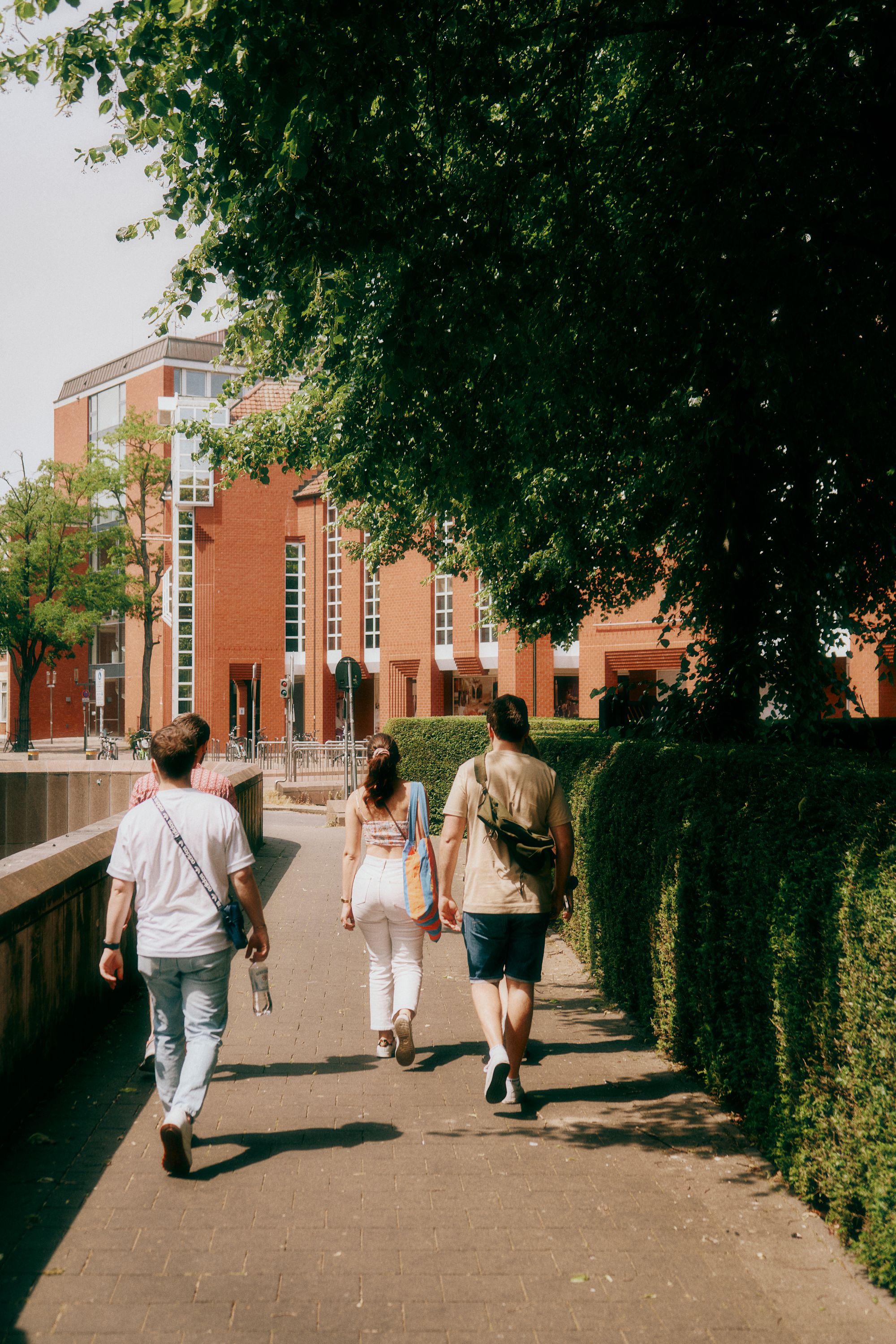
Students walking along a tree-lined pathway on a university campus

06 — Excellence Committee

Global Diplomacy Excellence Committee

To promote international collaboration in education, research, institutional partnerships, cultural exchange and global policy dialogue.

Chairperson

Dr. M. K. Vajpayee

International collaboration in education, research, institutional partnerships, cultural exchange and global policy dialogue.

Why it exists

This Committee complements the other five by extending their work beyond national boundaries — enabling Indian educational innovations to be shared globally while bringing international best practice into India's education ecosystem.

Vision

To create a worldwide network that strengthens international understanding, educational cooperation, knowledge exchange and collaborative innovation, connecting Indian institutions with global partners.

Mission

To promote international collaboration in education, research, institutional partnerships, cultural exchange and global policy dialogue — engaging educators, students, researchers, professionals, policymakers, alumni and diaspora communities in building long-term partnerships that advance education and sustainable development.

01 — Strategic pillars

The Committee organises its work around six pillars.

  1. 01

    Academic Diplomacy

    University, school and research partnerships.

  2. 02

    Knowledge Diplomacy

    Global sharing of educational resources, multilingual content and best practices.

  3. 03

    Science and Innovation Diplomacy

    Collaborative research, emerging technologies and innovation ecosystems.

  4. 04

    Cultural and Civilisational Dialogue

    Fostering intercultural understanding through education, languages, heritage and shared values.

  5. 05

    Development Diplomacy

    Partnerships supporting the Sustainable Development Goals, capacity building and institutional strengthening, particularly in the Global South.

  6. 06

    Diaspora and Institutional Diplomacy

    Engaging diaspora professionals, alumni and international experts to build enduring networks of collaboration.

02 — Strategic priorities

What the Committee is working towards.

  • 01Academic Diplomacy — university, school and research partnerships
  • 02Knowledge Diplomacy — global sharing of educational resources, multilingual content and best practice
  • 03Science and Innovation Diplomacy — collaborative research, emerging technologies and innovation ecosystems
  • 04Cultural and Civilisational Dialogue — intercultural understanding through education, languages, heritage and shared values
  • 05Development Diplomacy — partnerships supporting the Sustainable Development Goals and institutional strengthening, particularly in the Global South
  • 06Diaspora and Institutional Diplomacy — engaging diaspora professionals, alumni and international experts in enduring networks

03 — Sub-committees

The Committee functions through three specialised sub-committees.

Together they ensure that standards are developed, implemented and continuously improved across institutions.

06.1

Global Diplomacy Curriculum Sub-Committee

Curriculum

To develop globally relevant curricula that prepare learners to become responsible global citizens capable of working across cultures, disciplines and nations.

Mission

To design interdisciplinary curricula integrating international relations, intercultural communication, sustainable development, global citizenship, science diplomacy, educational diplomacy, negotiation, leadership and collaborative problem-solving.

Responsibilities

  • Develop curriculum frameworks
  • Design international certification programmes
  • Create teacher and faculty guides
  • Develop multilingual learning resources
  • Prepare global competency assessments
  • Integrate the Sustainable Development Goals into educational programmes
  • Promote international collaborative learning

Major deliverables

  • Curriculum Framework
  • Global Citizenship Modules
  • Teacher Handbook
  • Student Learning Resources
  • Digital Learning Platform
  • Assessment Framework
  • International Certification Pathway

Expected outcomes

  • Institutions adopting the curriculum
  • International participation
  • Learners certified
  • Global collaborations initiated
  • Faculty engagement

06.2

Global Diplomacy Excellence Cells Sub-Committee

Excellence Cells

To establish Global Diplomacy Excellence Cells in educational institutions that serve as centres for international collaboration, intercultural dialogue, research partnerships and global engagement.

Mission

To support schools, colleges, universities and research institutions in building sustainable international partnerships that enrich teaching, learning, research, innovation and community engagement.

Responsibilities

  • Establish Global Diplomacy Cells
  • Identify international partners
  • Facilitate institutional collaborations
  • Organise international webinars and conferences
  • Promote collaborative research
  • Support faculty and student exchanges
  • Document global best practices

Institutional coverage

  • Schools
  • Colleges
  • Universities
  • Research Institutions
  • Professional Bodies
  • Innovation Centres

Expected outcomes

  • International institutional partnerships
  • Collaborative research projects
  • Student and faculty mobility
  • Global learning communities
  • Increased international visibility

06.3

Global Diplomacy Ambassador Programme

Ambassador Programme

To create a worldwide network of Global Diplomacy Ambassadors who strengthen international understanding, educational cooperation, knowledge exchange and collaborative innovation.

Mission

To engage educators, students, researchers, professionals, policymakers, alumni and diaspora communities in building long-term international partnerships that advance education and sustainable development.

Responsibilities

  • Recruit ambassadors across countries
  • Connect Indian institutions with global partners
  • Promote educational cooperation
  • Support collaborative research
  • Facilitate international dialogue
  • Encourage volunteerism for global initiatives

Ambassador categories

  • Student Ambassadors
  • Faculty Ambassadors
  • Research Ambassadors
  • Alumni Ambassadors
  • Country Ambassadors
  • Diaspora Ambassadors
  • International Coordinators
  • Strategic Partnership Ambassadors

Expected outcomes

  • A global ambassador network across multiple countries
  • Increased international collaboration
  • Cross-cultural educational programmes
  • Joint innovation initiatives
  • Sustainable international partnerships

Membership

Chairperson, members and contributors.

Dr. M. K. Vajpayee

Chairperson

Committee members constituted to date

  • Deepa Palaniappan
  • Dr. Chitra Kashyap
  • Dr. Asjad Usmani
  • Shruti Sharma
  • Farah Aqueel
  • Deepak Gupta

The Council’s governance record names these members collectively across the committees. Committee-level allocation will be published as appointments are finalised. Each committee may have up to twelve members.

The Committee also draws on

  • Domain experts
  • Institutional volunteers
  • Academic advisors
  • Student ambassadors
  • Faculty ambassadors

Programmes, projects and resources

What this committee produces.

Projects

Downloads

  • Global Citizenship Curriculum FrameworkPending
  • International Partnership GuidelinesPending
  • NEP 2030 Framework DocumentPending

Events

The Committee meets in weekly working sessions and presents work in progress at the Monthly Knowledge Forum. Schedules and registration will be published on the Events page.

Events

Frequently asked questions

Global Diplomacy Excellence, answered.

The full knowledge base

The deliberate use of education, research and knowledge exchange to build durable relationships between institutions across borders — distinct from, and complementary to, formal diplomacy between states.

Collaborate

Work with the Global Diplomacy Excellence Committee.

The Committee welcomes practitioners, researchers, institutional leaders and volunteers who want to contribute to its frameworks, curricula and field programmes.

Partner with IPECContribute